
Published: April 2022
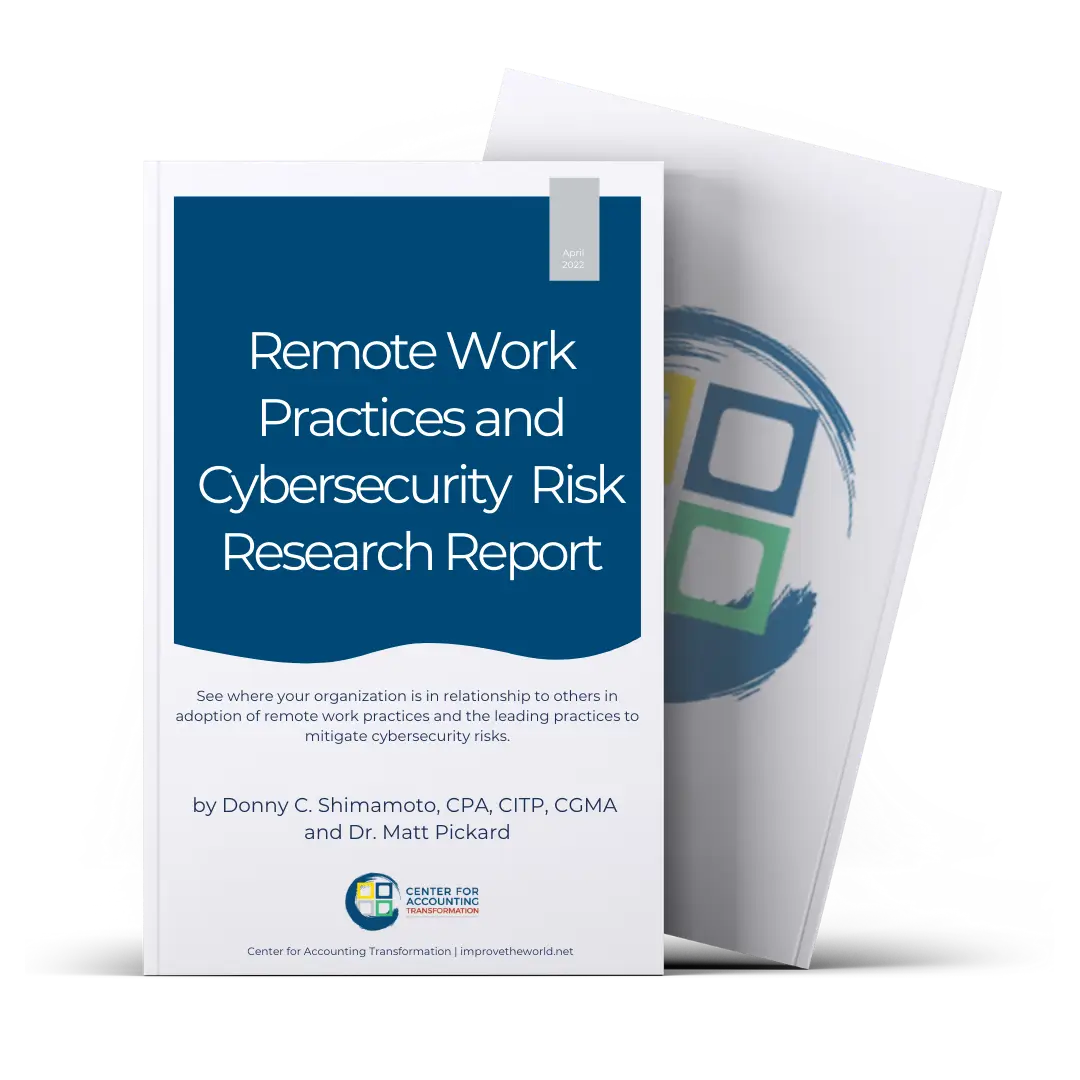
Remote work practices and the leading practices to mitigate cybersecurity risks
Remote and hybrid work have become a standard part of how organizations operate, supported by an expanding set of digital tools and distributed workflows. While these models offer flexibility and efficiency, they also introduce new considerations around data security and risk management.
At the same time, cybersecurity threats continue to evolve, prompting insurers, regulators, and stakeholders to expect stronger, more proactive controls. Organizations are increasingly being asked to demonstrate not only awareness of these risks, but also the steps they are taking to address them.
In a recent survey conducted by the Center for Accounting Transformation, our analysis highlighted a need for greater awareness of cybersecurity risks and a clearer understanding of the controls required to mitigate them. The findings reinforce the importance of thoughtfully balancing the advantages of flexible work environments with the responsibility to maintain strong, resilient security practices.
In This Report You Will Learn About:
- Risk Aversion and Trust
- Risk Tolerance versus Cybersecurity Controls
- Remote Work Devices and Security
- Securing the Home Network
- Additional Cybersecurity Controls
- Recommendations
Access the report to see where your organization falls in relationship to others in adoption of remote work practices and the leading practices to mitigate cybersecurity risks.
More Research
Completed Research
Advisory 360 Research Study Report
Does advisory work truly drive firm success? The Advisory 360 study by the Center for Accounting Transformation and CPA Trendlines explores whether advisory or compliance models perform better—and how specialization shapes outcomes.
Completed Research
2025 AFP Payments Fraud and Control Survey Report
Payments fraud is rising, with 79% of organizations targeted in 2024. Insights from 500+ treasury professionals show threats evolving faster than controls, exposing gaps in prevention and recovery—and reinforcing the need for stronger, more adaptive defenses.
Active Research
Staffing Strategies Research
What staffing strategies are actually working in accounting today? Ongoing research from the Center for Accounting Transformation and CPA Trendlines reveals data-driven approaches helping firms navigate the talent crisis. Explore the insights.
External Research
Re-Decoding the Decline
A national survey by the Illinois Society of CPAs of 7,780 students and young professionals reveals what’s driving CPA career decisions. The 2024 report uncovers key perceptions, challenges, and deterrents shaping the pipeline—offering critical insights the profession can’t ignore.
External Research
The Cost of Losing Talent
The 2025 Accounting MOVE Project examines how evolving attitudes toward diversity, equity, and inclusion are influencing the accounting profession at a critical moment marked by severe talent shortages and leadership transitions. The report explores how workplace culture, belonging, and equitable advancement practices directly affect firms’ ability to attract, retain, and develop professionals. It highlights the strategic risks of disengagement, shares insights from participating firms, and reinforces inclusion as a practical business imperative essential to the profession’s long-term resilience, competitiveness, and growth.
Completed Research
IT Platforms Report
The IT Platforms Report delivers a data-driven look at how accounting firms are selecting, using, and optimizing their technology. It highlights adoption trends, firm-level differences, and practical insights to help benchmark and evolve tech strategies.
External Research
2024 CPA Firm Tech Report
In this study, CPA Crossings partnered with five industry subject matter experts to identify the most common challenges to implementing and leveraging technology—and how to overcome them.